How business vehicle finance works
Business vehicle finance is a loan or lease taken out by your business, not by you personally, to buy a ute, van, truck or company car. The vehicle usually secures the loan, which keeps the rate well under an unsecured business loan. The repayments come out of the business, and depending on the structure, so can the tax deductions. Lenders also call it commercial vehicle finance or a business car loan.
What trips people up is that there are three quite different ways to do it, and the lowest repayment is not always the best result for the business. How you use the vehicle, whether you're registered for GST and what you want to happen at the end of the term all change the answer.
Business or personal loan?
Lenders generally want the vehicle used more than half the time for the business before they will write it as business finance, and the business then gets the tax benefits for its share of use. If it is mainly a family or weekend car, a personal car loan is usually simpler. Lenders and your accountant will both want to know how the vehicle will really be used.
Sole traders can use business finance too. The loan is in your name, trading under your ABN, and the lender looks at the business's history alongside your personal credit.
Chattel mortgage, finance lease or rental
These are the three structures lenders offer for business vehicles. Here is the plain-English difference.
Chattel mortgage
The business owns the vehicle from day one and the lender holds it as security. The most common choice for utes and vans. If you're registered for GST you can generally claim the GST on the purchase price in your next BAS, and the interest and depreciation may be deductible for the business-use share.
Finance lease
The lender owns the vehicle and leases it to the business for a fixed term, with a residual to pay at the end if you want to keep it. Lease payments are generally deductible for the business-use share, and GST is paid on each payment rather than up front.
Rental
The business pays a fixed amount each month to use the vehicle, with no ownership and usually no residual. At the end of the term you hand it back or upgrade. It suits businesses that change vehicles often.
Some lenders also offer commercial hire purchase. We compare all four structures, hire purchase included, in chattel mortgage, hire purchase, lease or rental. Your accountant should always have the final say on the tax side.
What vehicles we fund
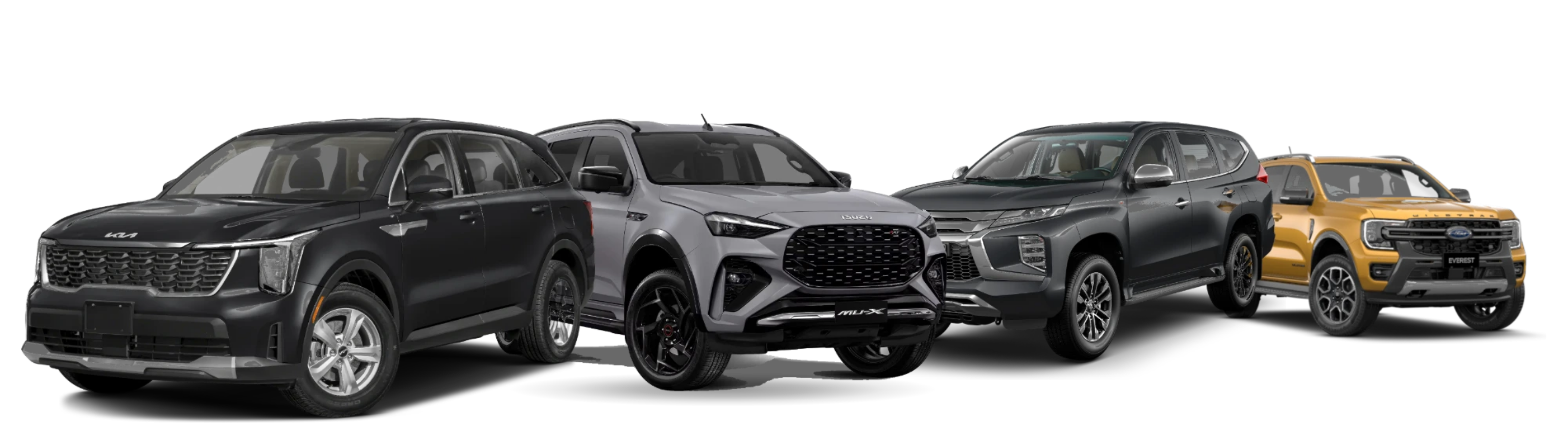
Utes and 4WDs
Single and dual cabs, trays, canopies and fit-outs, new or used. See ute finance.
Vans
From small runabouts to long wheelbase vans, with racking and signage in the same loan. See van finance.
Cars, EVs and light trucks
Company cars, electric vehicles and light commercials. Buying something heavier? See truck loans.
What lenders look at
Every lender weighs it differently, but these are the things they all ask about.
How long your ABN has been running
Many lenders prefer an ABN that has been active for around two years. Newer businesses can still get approved, often with a deposit or a strong personal credit history behind the application.
GST registration and trading history
Being registered for GST opens up more lenders and more structures. Business bank statements show the lender how money actually moves through the business, which counts for a lot when the financials are thin.
Your financials, or the low doc route
A full doc application uses your tax returns and financial statements. If yours are behind, plenty of lenders will work from your ABN, BAS and bank statements instead, usually at a slightly higher rate.
The vehicle itself
Age, kilometres, what it will be used for and whether you're buying from a dealer or privately. Most lenders are comfortable with utes, vans and light commercials. Older or heavily modified vehicles narrow the field, which is exactly where comparing the panel pays off.
Getting the structure right
Three decisions shape what the vehicle really costs the business over the term.
Deposit or no deposit
Established businesses can often borrow the full price with nothing down. A deposit or trade-in lowers the repayment and can sharpen the rate, but it also ties up cash the business might need elsewhere.
Balloon or no balloon
A balloon lowers every repayment now and leaves a lump sum at the end. It suits a vehicle you'll trade in or refinance, less so one you plan to run into the ground. Our guide to balloon payments runs the numbers both ways.
One vehicle or a fleet
If you're adding several vehicles over the next year or two, a fleet facility with an approved limit can beat applying for each one separately. Less paperwork, and you're not starting from scratch every time you add a ute.
An example repayment, with and without a balloon
Illustrative only. A $60,000 ute over five years at an example rate of 9.50% p.a., fees not included.
| Setup | Repayment | Total repaid |
|---|
| Five years, no balloon | $1,260 a month | $75,607 |
| Five years, $18,000 balloon (30%) | $1,025 a month | $79,475 |
| Seven years, no balloon | $981 a month | $82,374 |
The balloon saves about $235 a month for about $3,900 more interest, with $18,000 still due at the end. Seven years saves about $279 a month for about $6,800 more.
These figures are illustrative only. They are not a quote, a current rate or an offer of credit. Your rate, fees and terms depend on the lender, the vehicle and your circumstances. Repayments are calculated in arrears and rounded.
When the balloon falls due
You have three choices: pay it out and own the vehicle, refinance the balloon over a new term, or trade the vehicle in and use the proceeds to clear it. Plan for it from the start, because the vehicle may be worth less than the balloon by then.
What you will need
Sole traders
- ABN and GST registration status
- Driver licence and your address history
- Recent BAS lodgements or business bank statements
- Tax returns if you are going full doc
Companies and trusts
- ABN, ACN and the trust deed if there is one
- Licence and address details for each director or trustee
- Recent BAS lodgements and business bank statements
- Financials and tax returns if you are going full doc
The vehicle
- A dealer quote or tax invoice, or the private seller's details
- For a used vehicle, the VIN, kilometres and registration
- Any accessories or fit-out you want funded in the same loan
Business vehicle finance questions
Can I use a business vehicle privately?
Yes, but the business can generally only claim deductions for the business-use share. For many vehicles that means keeping a logbook. Utes and vans built mainly to carry goods are treated differently to passenger cars, so ask your accountant how yours is treated.
Do I need a deposit?
Not always. Many lenders will fund the full price for an established business with a clean credit history. Newer ABNs and older vehicles are more likely to need something down.
Can I buy a used vehicle, or buy privately?
Yes. Most lenders fund used vehicles from dealers and private sellers. The lender checks the seller owns the vehicle and that there's no money owing on it, and some set a maximum age for the vehicle at the end of the loan.
Is a ute or van treated differently to a car?
For the finance, not much. All of them are commonly funded with a chattel mortgage or a lease. For tax, passenger cars fall under the ATO's car limit, while utes and vans designed to carry a tonne or more generally do not. Your accountant can tell you where yours sits.
What counts as a commercial vehicle?
For finance, it's a vehicle the business uses more than half the time: a ute, van, light truck or company car. A commercial vehicle loan and a business car loan are the same thing, usually a chattel mortgage or a lease in the business's name. Buying something heavier, like a prime mover? See truck loans.
How long does approval take?
Straightforward deals for established businesses can come back within a day. New ABNs, low doc applications and bigger fleet deals take longer because there's more to check. We'll give you a realistic timeframe when we call.
Can I put a 4WD through the business?
Yes. The same structures apply, and plenty of 4WDs go on the ABN. Our 4WD finance page covers what's different about touring builds and fit-outs.
Can I get business vehicle finance if my ABN is under two years old?
Often, yes. Some lenders will approve a newer ABN, especially with industry experience, a deposit or a strong personal credit history. The options widen once the business has two years of history.
Whose name does the vehicle go in?
The borrower's. For a company or trust that is the entity, usually with the directors as guarantors. For a sole trader it is you, trading under your ABN.
Can the business claim the GST?
With a chattel mortgage, a GST-registered business can generally claim the GST on the purchase price in its next BAS, up to the car limit for passenger cars. With a lease or rental, GST is part of each payment instead. Your accountant should confirm how it applies to you.
Buying something bigger? See truck loans or equipment finance. Kitting out a trade business from scratch? Start with equipment finance for tradies.















































































.svg)



.svg)




